
It's ok, though. They are making a profit, so it must be good for the country.

I'm coining a new term today. Lots of people are familiar with the term "anonymous Christianity." This is basically the theory that people who have never heard of Christ or even who have explicitly rejected Him could still be saved through a general orientation of their lives toward Christian values. While I frankly believe the notion to be rife with Pelagianism and fundamental option morality, the only thing relevant to the discussion at the moment is this basic 30,000 foot definition.

So asks the New York Times.
Gee, guys, how nice of you to notice, much less care.
A a couple of observations about the article.
First, it's somewhat striking that the word "genocide" is used a grand total of twice in the whole article. Once is a reference to the Armenian massacres conducted by the Turks. The other is mentioning the ISIS "threat" of genocide against the Yazidis. You would think that the entire crux of the article, that Christianity is being wiped out in the region of its birth, would merit at least a token use of the term, right?
Second, in its brief discussion of Islamic history, the article basically makes two points. Point A is that Christians were worse to religious minorities than Muslims. It must have been pretty awesome to live under Muslim rule since the article mentions that in such arrangements that "for 1,500 years, different religions thrived side by side."
Point B is made by the utter silence of the article regarding the centuries of Muslim aggression towards the West, specifically Christianity. It literally jumps from the above-mentioned conquest of the Middle East to World War I. Nothing about Spain, Eastern Europe, or that it was well-nigh unrelenting war until Jan Sobieski broke the Mohammedans at Vienna in 1683. Oh, and that whole Armenian genocide thing? It was just a coincidence that pretty much all those people being murdered happened to be Christian. Damn shame how that worked out.
There are a few more points I could make in the same vein, but you get the picture. It's actually a pretty good piece otherwise. You should read it. Maybe download it and save a copy so that future generations will have an understanding of how we knew exactly what was going on while these peoples were exterminated. After all, isn't that part of what made the Holocaust so bad? That people everywhere supposedly knew what was going on and did nothing?
Who am I kidding? The future generations will be so secularized that they won't care either. They'll probably celebrate over how these awful Christians got what they deserved.
This is the face of peace in our time. So when people wax poetic and drop trou about "brave" things like the Vatican's stance on global warming, the Pope's criticisms of capitalism, or the latest presidential candidate's stand on anything, let's remember our persecuted brothers and sisters. Let's recall the Holy Land and the patrimony of the Church, the repeated blasphemies and sacrileges being committed against God at this very moment by the Mohammedans. And let's recall how little to nothing was done to help them. When you see the next great ecumenical gathering sponsored by the Church at which absolutely nothing happens (*cough*ARCIC*cough*), consider what could have been done to maybe airlift out brethren to sanctuary or ransom some families from captivity.
Then wonder at the bravery of the martyrs.
May Our Lady shield them and protect them, and may God Almighty deliver repentance and justice to their tormentors.
Ok, I know it's been a while, and lots of stuff has gone on, but let me start with this issue.
I’ve gotten a bunch emails asking about the encyclical.
I didn’t read it and won’t be. After Caritas in Veritate and Evangelii Gaudium, I just don’t have it in me. This practice of spending thousands and thousands of words to say very, very little of substance is exhausting, and in modern internet parlance, ain’t nobody got time for that. Moreover, reactions to the encyclical seem to fall into just a couple of different categories:
1. “There’s nothing new or profound here. The Pope is just reiterating a lot of prior teachings under one umbrella. Sure, he buys into global warming, but that’s a small portion of the encyclical, and those parts, while relevant in their overall view of how we understand our role in Creation, don’t obligate us to believe a certain scientific theory.”
2. “The Pope is a Marxist/Modernist/both Marxist and Modernist.”
3. “What did I just read?”
If the first item is true, then I’m not sure why I should take the time to read it. I’m familiar with the Church’s teaching on this subject, so if there’s no new profound study on the matter here, I’m good.
If it’s the second, the above still holds. Why should I disturb my calm? I’m familiar with Church teaching and assent to it. No need to slog through thousands of words to wind up with confusion or simply time that was wasted.
If it’s the third, then I must simply admit that I don’t understand and acknowledge that I’m willing to assent to the Church’s teaching whatever it may be.
I continue to go back to the Pope’s words in EG. He calls for a more simplified presentation of the Faith, yet he produces documents (allegedly written to everyone!) so bloated and convoluted that they are worthless to the average person, of which I am one.
As to the global warming bit, I personally don’t buy into the anthropogenic global warming stuff. If the Pope does and put it in an encyclical, I kind of put that in the same category as the bizarre comment about what “true Islam” is from EG. Anyways, the main difficulty I see most folks having with it is the ability of the Church to pronounce on economic issues.
With all this in mind, I offer the following items that are oft-repeated features of the Church's social doctrine. When confronted with allegedly novel ideas from Laudato Si, my advice is to recall the Church's constant teaching on such matters and take refuge there (emphasis added).
1.
Many believe in or claim that they believe in and hold fast to Catholic doctrine on such questions as social authority, the right of owning private property, on the relations between capital and labor, on the rights of the laboring man, on the relations between Church and State, religion and country, on the relations between the different social classes, on international relations, on the rights of the Holy See and the prerogatives of the Roman Pontiff and the Episcopate, on the social rights of Jesus Christ, Who is the Creator, Redeemer, and Lord not only of individuals but of nations. In spite of these protestations, they speak, write, and, what is more, act as if it were not necessary any longer to follow, or that they did not remain still in full force, the teachings and solemn pronouncements which may be found in so many documents of the Holy See, and particularly in those written by Leo XIII, Pius X, and Benedict XV.
There is a species of moral, legal, and social modernism which We condemn, no less decidedly than We condemn theological modernism.
Pope Pius XI, Ubi Arcano Dei Consilio
In other words, the Church has every right to talk about these things, and it's inappropriate to separate our economic actions from our other moral principles.
2.
Pope Pius XI further emphasized the fundamental opposition between Communism and Christianity, and made it clear that no Catholic could subscribe even to moderate Socialism. The reason is that Socialism is founded on a doctrine of human society which is bounded by time and takes no account of any objective other than that of material well-being. Since, therefore, it proposes a form of social organization which aims solely at production, it places too severe a restraint on human liberty, at the same time flouting the true notion of social authority.
St. John XXIII, Mater et Magistra
Remember this when people try to suggest that the crap of liberation theology can ever be granted sanction by the Church.
3.
Differences of opinion in the application of principles can sometimes arise even among sincere Catholics. When this happens, they should be careful not to lose their respect and esteem for each other. Instead, they should strive to find points of agreement for effective and suitable action, and not wear themselves out in interminable arguments, and, under pretext of the better or the best, omit to do the good that is possible and therefore obligatory.
In their economic and social activities, Catholics often come into contact with others who do not share their view of life. In such circumstances, they must, of course, bear themselves as Catholics and do nothing to compromise religion and morality. Yet at the same time they should show themselves animated by a spirit of understanding and unselfishness, ready to cooperate loyally in achieving objects which are good in themselves, or can be turned to good. Needless to say, when the Hierarchy has made a decision on any point Catholics are bound to obey their directives. The Church has the right and obligation not merely to guard ethical and religious principles, but also to declare its authoritative judgment in the matter of putting these principles into practice.
St. John XXIII, Mater et Magistra
There isn't just one way of talking about these things or remedying problems of social justice, so we should be charitable to each other in our discussions and recognize the legitimacy of these different opinions.
4.
Many other people, while not completely marginalized, live in situations in which the struggle for a bare minimum is uppermost. These are situations in which the rules of the earliest period of capitalism still flourish in conditions of "ruthlessness" in no way inferior to the darkest moments of the first phase of industrialization. In other cases the land is still the central element in the economic process, but those who cultivate it are excluded from ownership and are reduced to a state of quasi-servitude. In these cases, it is still possible today, as in the days of Rerum novarum, to speak of inhuman exploitation. In spite of the great changes which have taken place in the more advanced societies, the human inadequacies of capitalism and the resulting domination of things over people are far from disappearing. In fact, for the poor, to the lack of material goods has been added a lack of knowledge and training which prevents them from escaping their state of humiliating subjection...
In this sense, it is right to speak of a struggle against an economic system, if the latter is understood as a method of upholding the absolute predominance of capital, the possession of the means of production and of the land, in contrast to the free and personal nature of human work. In the struggle against such a system, what is being proposed as an alternative is not the socialist system, which in fact turns out to be State capitalism, but rather a society of free work, of enterprise and of participation. Such a society is not directed against the market, but demands that the market be appropriately controlled by the forces of society and by the State, so as to guarantee that the basic needs of the whole of society are satisfied...
It is the task of the State to provide for the defence and preservation of common goods such as the natural and human environments, which cannot be safeguarded simply by market forces. Just as in the time of primitive capitalism the State had the duty of defending the basic rights of workers, so now, with the new capitalism, the State and all of society have the duty of defending those collective goods which, among others, constitute the essential framework for the legitimate pursuit of personal goals on the part of each individual...
Returning now to the initial question: can it perhaps be said that, after the failure of Communism, capitalism is the victorious social system, and that capitalism should be the goal of the countries now making efforts to rebuild their economy and society? Is this the model which ought to be proposed to the countries of the Third World which are searching for the path to true economic and civil progress?
The answer is obviously complex. If by "capitalism" is meant an economic system which recognizes the fundamental and positive role of business, the market, private property and the resulting responsibility for the means of production, as well as free human creativity in the economic sector, then the answer is certainly in the affirmative, even though it would perhaps be more appropriate to speak of a "business economy", "market economy" or simply "free economy". But if by "capitalism" is meant a system in which freedom in the economic sector is not circumscribed within a strong juridical framework which places it at the service of human freedom in its totality, and which sees it as a particular aspect of that freedom, the core of which is ethical and religious, then the reply is certainly negative.
The Marxist solution has failed, but the realities of marginalization and exploitation remain in the world, especially the Third World, as does the reality of human alienation, especially in the more advanced countries. Against these phenomena the Church strongly raises her voice. Vast multitudes are still living in conditions of great material and moral poverty. The collapse of the Communist system in so many countries certainly removes an obstacle to facing these problems in an appropriate and realistic way, but it is not enough to bring about their solution. Indeed, there is a risk that a radical capitalistic ideology could spread which refuses even to consider these problems, in the a priori belief that any attempt to solve them is doomed to failure, and which blindly entrusts their solution to the free development of market forces.
The Church has no models to present; models that are real and truly effective can only arise within the framework of different historical situations, through the efforts of all those who responsibly confront concrete problems in all their social, economic, political and cultural aspects, as these interact with one another. For such a task the Church offers her social teaching as an indispensable and ideal orientation, a teaching which, as already mentioned, recognizes the positive value of the market and of enterprise, but which at the same time points out that these need to be oriented towards the common good.
St. John Paul II, Centesimus Annus
Don't believe some of the popular hype of the above writings of JPII. He's just as critical of capitalism as other popes. If anything, he's writing against socialism, rather than for capitalism, which he only grants in a limited form. He's certainly not advocating for what you hear from modern libertarians and such.
Just as a side note, take the economics out of it for a moment. Ask yourself if a "radical capitalistic ideology" in terms of our autonomy in every other area isn't how we got into the state of utter moral freefall that we find ourselves now. After all, if it's laissez faire with regards to our economic life, how does that remain separate from everything else?
Eugenio Scalfari makes scandalous comments about how Pope Francis doesn't believe in sin and admits that the interviews he recounts aren't all that representative of the truth, causing confusion for Catholics all over the world.
He lived a truly extraordinary life. And, as far as I can tell, kept the Faith until he died. I offer the following because I've already seen it referenced in at least one other place.
Christopher Lee was most definitely not an occultist and offered sober words for those who would dabble in such things.
Rest in peace, Sir Christopher.
I offer the following items ripped from today's headlines.
Examine the following image/caption pairings? Consider if said pairing conforms with reality.
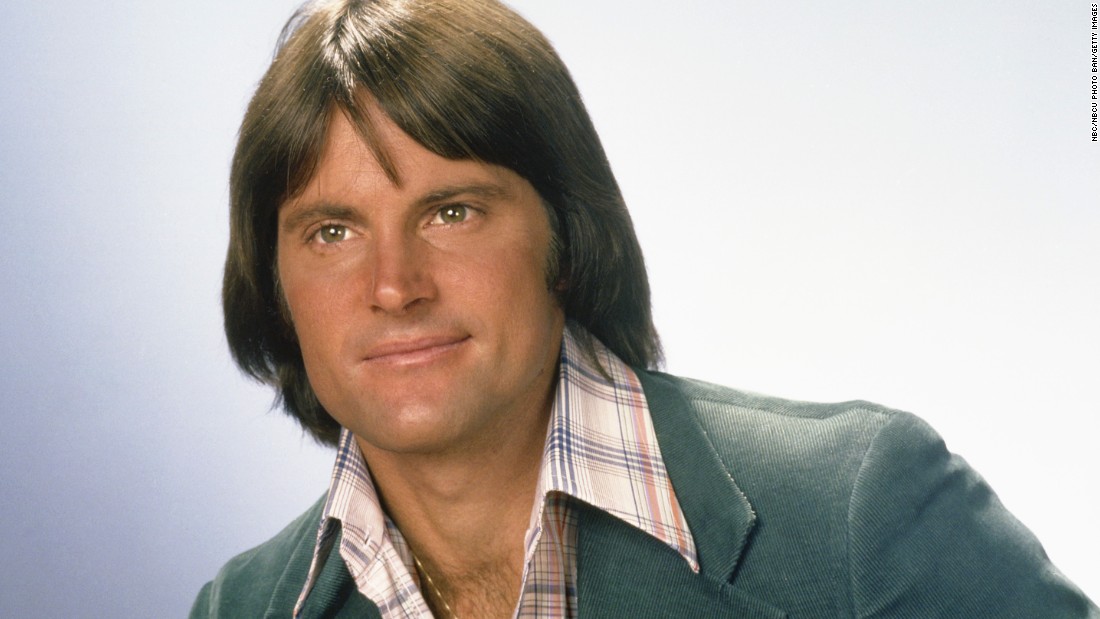
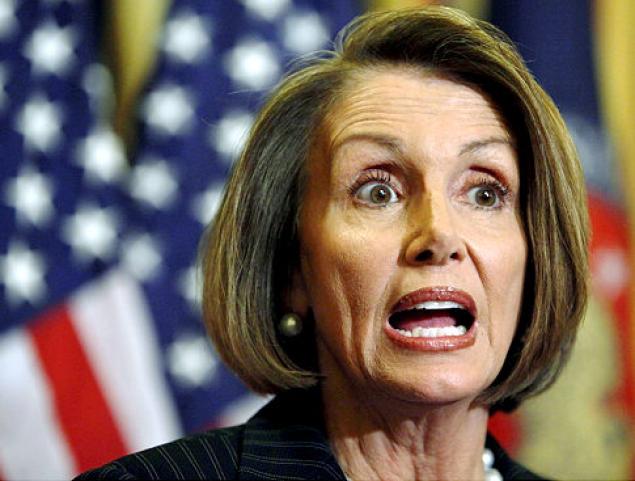
Is there really any reason to believe anything that Cardinal Kasper says about anything?
A few things that seem to be more important than the ongoing annihilation of Christians in the Middle East:
1. Gay people's access to baked goods.
2. Fake monarchs having kids.
3. Reality tv stars' criminal pasts (whether adults or kids)
4. The normalcy of a former athlete mutilating himself.
5. Presidential ambitions of people you've never heard of more than a year before the election.
It's an odd world when these things stir up so many passions, while genocide is treated as a fait accompli.
Given the latest media backlash, I guess you can have too much of a good thing. Super-hero movies are coming under an odd assortment of criticisms lately. Well, odd until you consider the sources, I suppose. As a Catholic, amateur film critic, and promoter of comic book literature, I feel I have to respond to some of these.
First, there's the outrage over Black Widow's treatment in Age of Ultron.
SPOILERS TO FOLLOW*****
I had trouble finding articles that were somewhat family friendly about this topic. This one is the best I could do. Has anyone noticed that so many of these secularist hipster darlings can't write about anything without f-bombs and such? Anyways, people are mad at Joss Whedon (the same guy who gave us Buffy, Faith, and Firefly) mainly because of two things:
1. He portrays Natasha Romanov as being willing to fall in love.
2. He portrays Natasha Romanov as sad over the fact that she can't have children.
These set her up as a natural contrast to her friend Hawkeye who has done both of these things. But yes, this is why so many people now hate Joss Whedon and the Avengers. They dared to show a woman who wanted to have a family.
This is what our reality has come to. A woman who wants these things is considered boring, weak, and worthless.
END SPOILERS*****
Second, you have guys like Simon Pegg, a fan of the genre and one of my favorite actors, accusing super-hero movies, sci-fi, and the like of "infantilizing" and "dumbing down" the population. In his mind, these things are distracting us from "real world issues," and he specifically desires more "amoral" movies to help with that.
Worse than that, you have Alejandro Inarritu, who just won the Oscar as director of Birdman (which won a whole bunch of other Oscars too), saying stuff like this:
They have been poison, this cultural genocide, because the audience is so overexposed to plot and explosions and shit that doesn't mean nothing about the experience of being human.
He also makes the claim that such movies are about "killing people because they do not believe in what you believe, or they are not being who you want them to be." Let's just ignore the fact that most super-heroes are bitterly opposed to killing anyone. It's also quite plain from his language here that Alejandro is extremely tolerant of opposing views.
Finally, you've got Fr. Zuhlsdorf, who has discovered that Daredevil is Catholic in the Netflix show, just as he is in the comic books. Fr. Z comments thusly:
As with any “comic book”, for that’s what this is, don’t expect depth.
I've got bad news for Fr. Z. If you go to the local Benedict Option Cinema, it's pretty much super-hero movies making up about 1/2 of the releases of the last decade. Look at what the secularist mavens are worried about with these films. They teach a concrete and traditional moral message, and a lot of people are going to see them.
What do the secularists want? Movies that lack this and show no moral compass at all. I daresay that super-hero movies are the only consistent productions nowadays that have any true depth at all. What currently passes for such is usually a banal relativism or simple nihilism. Which is deeper, the struggle for virtue against all odds or the white flag of surrender wherein the feature concludes, "Eh, who cares about that crap? We all die in the end anyway."
On a side note, I'm sure if someone made a movie about any of the exponentially proliferating homosexual super-heroes (Really DC/Marvel? Alan Scott? Iceman? Really?) that the above critics would be raving about how fantastic it was.
Wake up, Father. The war is being fought in this very arena, and our best weapons are coming under attack.
I saw a report on the news this weekend about how Nebraska's legislature has voted to abolish the death penalty in that state. There were clips of some speeches and an interview with one guy about why he was pushing this issue.

One thing I've noticed in all this religious liberty talk is the number of people who announce their utter disdain for Catholicism, who insist that the faithful be compelled to provide service for morally repugnant activities, but who simultaneously announce that they would be will to "go to the barricades" if the government ever tried to compel the Church to conduct homosexual weddings, ordain female clergy, and so forth.
When Indiana passes a law that is basically a reiteration of a federal law and based on a right explicitly discussed in the Constitution, all kinds of corporations and groups call for boycotts.
I hope you watched it. There was a report on the genocide of Christians in the Middle East. The story largely speaks for itself, but a couple of things struck me that weren't really part of the discussion.
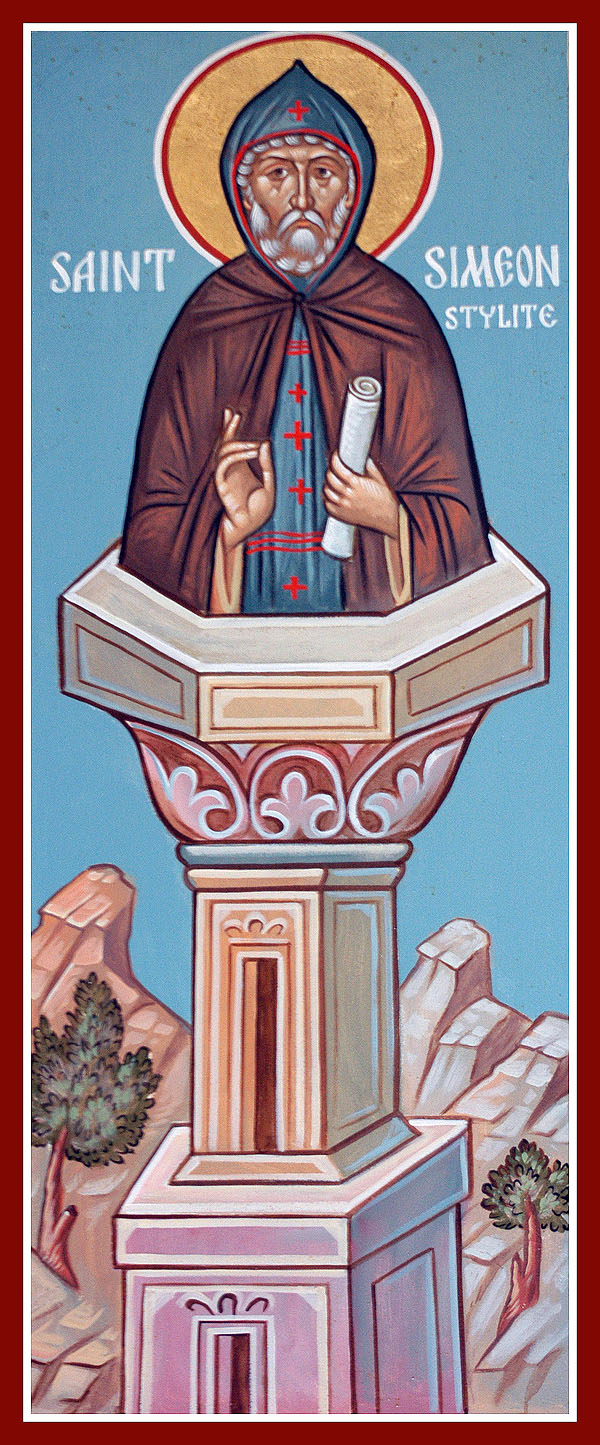
It occurred to me during the recent St. Patrick's Day how many great stories we have surrounding the Apostle of Ireland. Which made me think about all the other great stories we have about saints in general.
After that, I tried to imagine what the reaction would be like to these sorts of personalities if they were with us today. For example, consider the impressions people get when they hear about folks in Opus Dei who wear a cilice or use the discipline. Typically, they are horrified. If not horrified, they at least take the view that such people are weirdos and possibly even mentally ill.
Now compare that to this guy:

A couple of things I've been told in the last few days:
I am amazed at how so many people will take any and every opportunity to express their disdain and even hatred for our popes of recent history. It doesn't matter which one: Benedict XVI, JPII, Paul VI, and so forth. Yes, even John XXIII from some.
Sure, sure, I can always just boldly declare that he freaking rules. While true, that doesn't exactly explain things. In addition to his willingness to accurately label our current issues as apostasy, he has re-affirmed the Church in Africa's devotion to God, rather than the gold-plated filth passed off by the modern world as virtue.
Thanks to Phil Blosser for circulating this latest quote from His Eminence:
"The idea that would consist in placing the Magisterium in a nice box by detaching it from pastoral practice -- which could evolve according to the circumstances, fads, and passions -- is a form of heresy, a dangerous schizophrenic pathology. I affirm solemnly that the Church of Africa will firmly oppose every rebellion against the teaching of Christ and the Magisterium."
May God grant him many blessed years!
From the looks of things, it's given us a widespread perspective that stories where a guy and gal in a fornicative relationship wherein he beats her with a belt can be regarded as "romantic" and "empowering."

As an appendix to the post below re: St. John XXIII, we invite you to head over to Unam Sanctam and check out this entry that lays out some specifics on what we're talking about when we contrast the real John XXIII with the fabrication that is so often invoked these days.
The Pope has been on a big run lately in talking about the importance of fathers. Take these comments today from Zenit, for example.
In his address, Pope Francis continued his catechesis on the role of the father saying that he wanted to reflect on its positive aspects. Every family, he said, needs a father in order to transmit "what truly counts in life, namely a wise heart."
"A father knows wells how much it costs to transmit this heritage: how much closeness, how much sweetness and how much firmness," he said. "But, what a consolation and what a reward you receive, when children honor this heritage! It is a joy that redeems all labor, which surpasses all misunderstanding and heals every wound."
As I read these comments, I couldn't help but think of those whom we call "fathers" all through our lives. Not just the biological ones or even our priests, but the Church Fathers and a connection made in our prior post regarding St. John XXIII.
Do we have any comprehension of how revolting these Fathers are to the sensibilities of the modern Catholic? Take "inter-religious dialogue" for example. The Fathers, to a man, would happily tell you that non-Christian religions are essentially the worship of devils who have deceived people into thinking them gods. Consider how fast a priest would be reported to his bishop these days for making an observation that is bedrock Catholicism, transmitted to us at great cost, to use the Holy Father's words.
Heresy and schism within the definition of Christianity? Would the Fathers have held endless big money "conferences" and "seminars" with the Pelagians, iconoclasts, Donatists, and so forth? Would their have been an infinite number of self-congratulatory statements about non-existent "progress" and "mutual enrichment"?
Of course not.
Yet these perspectives are anathema to our modern minds. How sad that, as we have a pope emphasizing the role of fathers and the respect due to them, we, their spiritual children, have chosen to forsake their wisdom in exchange for banal platitudes.

